
Spirits of the Old Fort at Topa Tower
Spirits of the Old Fort at Topa Tower
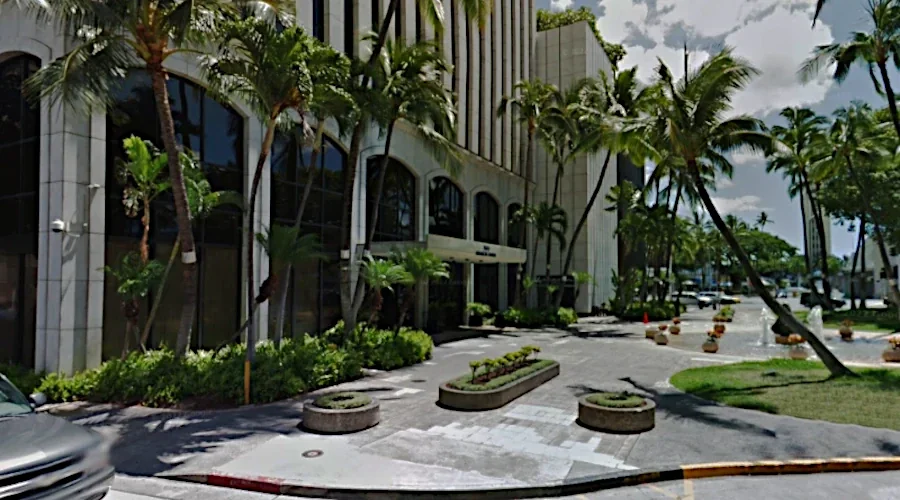
In the heart of Downtown Honolulu, where Walker Park meets the modern glass façade of the Topa Financial Center, few realize they are standing on the grounds of Fort Kekuanohu, also known as the Old Fort. Today, it is a place of business and routine, but beneath it lies a history marked by conflict, imprisonment, and death, making it one of the more quietly unsettling haunted places in Honolulu.
Power, Punishment, and Protection
In the early 1800s, Honolulu Harbor was a critical stop for ships crossing the Pacific. In 1815, King Kamehameha I granted Russian traders permission to build a storehouse near the harbor. Instead, they constructed a fort and raised the Russian flag. Once their deception was discovered, Kamehameha ordered their removal.
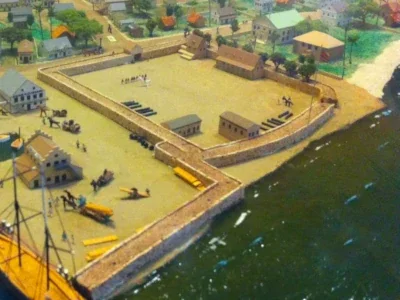
The fort was later rebuilt and expanded by Governor John Adams Kuakini. Enclosing nearly two acres, it became the largest structure in Hawai‘i at the time, with 52 cannons mounted along its walls. The main gate faced what is now Fort Street, directly along the Queen Street crosswalk.
But Fort Kekuanohu was more than a military stronghold. It served as the kingdom’s administrative center, housing the governor’s residence, barracks, a prison, and most notably, a gallows.
Marked by Multiple Executions
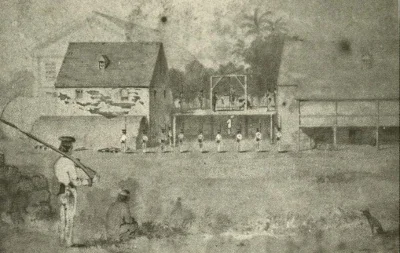
The fort became the site of some of the earliest recorded executions in Hawai‘i.
Among them were Kamanawa, a high-ranking ali‘i and grandfather of King Kalākaua and Queen Lili‘uokalani, and his accomplice, Lonopuakau. In 1840, both men were convicted of murdering Kamanawa’s wife, Kamokuiki. They were hanged at the fort—an event that marked the first documented hangings in the islands.
The gallows were initially erected above the fort’s gate, visible from a distance along what is now one of Downtown Honolulu’s busiest corridors. Later accounts and paintings suggest the executions continued within the fort’s walls, near the area where the Fort Street Tower of the Topa Financial Center now stands.
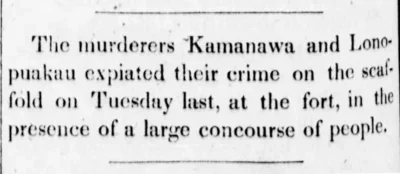
The fort became the site of some of the earliest recorded executions in Hawai‘i.
Among them were Kamanawa, a high-ranking ali‘i and grandfather of King Kalākaua and Queen Lili‘uokalani, and his accomplice, Lonopuakau. In 1840, both men were convicted of murdering Kamanawa’s wife, Kamokuiki. They were hanged at the fort—an event that marked the first documented hangings in the islands.
The gallows were initially erected above the fort’s gate, visible from a distance along what is now one of Downtown Honolulu’s busiest corridors. Later accounts and paintings suggest the executions continued within the fort’s walls, near the area where the Fort Street Tower of the Topa Financial Center now stands.
Places where multiple deaths occur—especially those tied to violence or punishment—are often said to retain a lingering energy. In haunted Honolulu, such locations are frequently associated with restless spirits, bound not just to the land, but to the events that took place there.
Lost Time and Lingering Spirits
In modern times, the Topa Financial Center has quietly developed a reputation of its own. More than one person has reported experiencing what is often described as “lost time” within the building—particularly in the Fort Street Tower, moments where they cannot account for a period of minutes, or even longer, with no clear explanation. A person may feel as though only seconds have passed, only to realize that much more time has slipped away.
Just outside the building, along the Queen Street crosswalk where the fort’s gate once stood, another phenomenon has been reported. Drivers have described stopping at the crosswalk as a person steps off the curb, preparing to cross. But in the brief moment it takes to glance away and look back, the person is gone.
These fleeting encounters echo the site’s past, where people once gathered, waited, and watched events unfold at the very same location.
What Remains of the Past in Haunted Honolulu
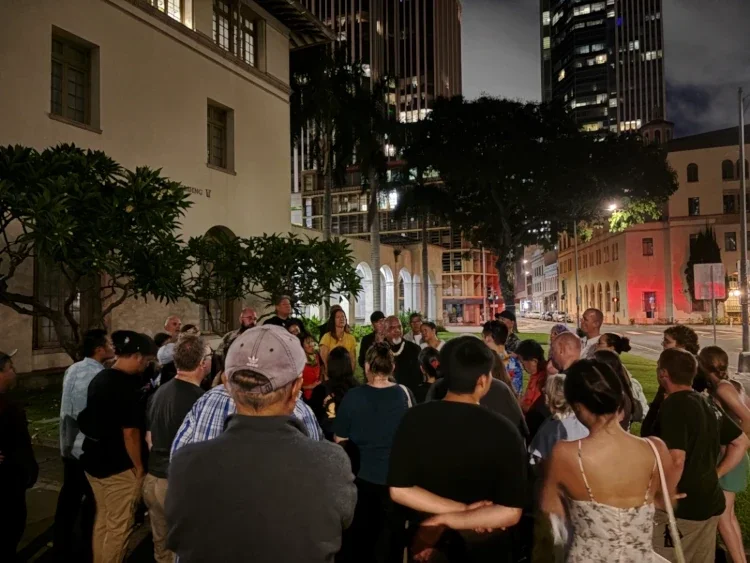
From the hidden foundations of the Old Fort to the modern streets of Downtown, Honolulu is filled with places where history and the unexplained intersect. Our Honolulu ghost tour explores the haunted places in Honolulu and walks the ground where the past still waits, like the haunted ‘Iolani Palace, and the historical Kawaiaha‘o church.
Join our ghost stories tour that brings these chilling legends to life and discover haunted places in Honolulu you won’t find in any history book.
